Product Description
ArmourFlex UV Protection Oil is a blend of natural oils, resins and waxes that protects wooden cladding and other external wood against weathering and UV damage. The oil also contains ingredients to help prevent the growth of mould, algae and fungi.
This oil is suitable for both softwood and hardwood, providing a water repellent finish that is resistant to flaking, cracking, blistering and peeling. ArmourFlex Protection Oil prevents cladding and external wood from needing repairs or replacement due to UV or water damage.
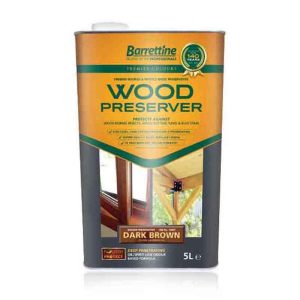
When applying to unpreserved wood, use Barrettine Universal Wood Preserver as primer before application. This provides additional protection to the cladding against wet rot and wood boring insects, further prolonging the lifespan.
If the wood has already begun to grey from UV exposure, apply Barrettine Wood Reviver before this cladding oil. This will restore the wood to it’s original colour, with the oil preventing future discolouration and damage due to sun exposure.
If you have any queries regarding this product, our technical team are happy to help. We are available by phone or web chat during our opening hours, and respond to emails sent outside of these hours the next morning.
Application Conditions
Stir thoroughly with a flat-bladed paint stirrer before and during application, ensuring good ventilation (preferably apply outside). Protect areas not intended to be coated with impermeable sheeting/masking tape and if in doubt, confirm suitability before use.
The moisture content of the wood should not be above 20% and can be checked using a handheld moisture meter. The temperature during application and drying must be between 5-30°C, with no rain forecast within 12 hours. The relative humidity must be below 80% and ideally below 60%. If heavy rain has occurred recently, wait a minimum of 2 days for wood to thoroughly dry throughout. Application during cold or damp conditions will impact drying and may lead to a milky/hazy appearance as moisture becomes trapped in the finish.
Application Process
Apply 2-3 coats. Decant the product as needed and apply evenly using a high-quality brush and/or roller. The first coat can be applied generously until no further product will absorb into the wood. Subsequent coats should be applied sparingly. Beyond 2 coats, the gloss level will increase.
The first coat on bare/weathered wood will absorb far more product than subsequent coats. Product can be re-coated after approximately 4 hours but will require a minimum of 10 hours to develop maximum water repellence. Protect from rain/frost until dry, to avoid damp becoming trapped within the finish.
Coverage – approximately 15 – 20m² per litre, though this depends on the type of wood.
For full details of preparation based on the current state of the wood, please see the Technical Data Sheet.
Q: How long will the product last?
A: There is no definite answer to this question, as it will depend on how much sun, rain and frost the wood is subjected to. Our testing is carried out in the UK under ‘worst case scenarios’, with an exposed South facing façade at 45°C to the sun. This maximises the amount of UV light our test pieces receive, and they also experience the full brunt of British rain and frost. Under this scenario, our test pieces require re-coating approximately once per year. However, most exterior joinery is not at 45°C and usually has some degree of shade at certain times of day. For a more realistic average scenario, we would expect most situations to require re-coating every two years, and this is best carried out in early Autumn or after the last Spring frost.
Q: The film has dried with a milky film, why? How can I remove this?
A: This indicates that there is moisture trapped within the film. The most likely cause is application to damp wood, or that the temperature has dropped overnight, causing condensation to form within the wood. To remove the haze, the top layer will need to be lightly sanded back, wiped with White Spirit and then thinly re-coated under optimum conditions.
Q: The ArmourFlex UV Protection Oil has been drying for over 10 hours and is still tacky, how do I fix this?
A: It may be that the conditions are not optimal for drying, so it is delayed. This can be expected when the humidity is high, or ambient temperature is low. In this case, it is worth waiting a further 24 hours to see if the surface will dry fully.
* However, a tacky surface also occurs when the ArmourFlex UV Protection Oil has been applied too thickly. It dries by curing with air but once the top layer cures, it prevents the air from reaching the layers below. Consequently, applying too much in a single application will prevent full hardness from developing. In the worst case, the film will remain squishy. To remedy this, severe excess should be removed with a scraper or wire wool soaked in white spirit. The surface should then be wiped down with white spirit and allowed to dry for 24 hours. Following this, the surface should be lightly sanded and a final thin coat reapplied as normal.
* Finally, application onto woods with a high tannin content can lead to delayed drying times, particularly if their surface has been freshly cut or sanded. In this situation, the surface should be rubbed down with fine wire wool dampened with white spirit, wiped dry with a cloth then allowed to dry for 48 hours. Following this, a fresh coat should be applied.
Q: It rained before the ArmourFlex UV Protection Oil was fully dry and has left water marks. How do I remove them?
A: Initially, try wiping with white spirit. If this does not work, then lightly sand the surface and apply another thin coat.
Q: There is a patchy finish after I’ve used the ArmourFlex UV Protection Oil. What has caused this?
A: This could be caused by a number of things, but the most likely reasons are a) uneven application b) uneven removal of previous coatings or c) uneven weathering of the wood below. In case of a) the surface should be lightly sanded back, then a thin coat re-applied. However, in the case of b) and c) a more thorough sanding may be required, to remove all previous coatings and weathered wood. In the case of c), Barrettine Wood Reviver could also be used to restore the weathered wood to its original colour.
Q: Why has my wooden structure weathered unevenly?
A: How quickly a surface weathers depends on a number of factors, with the direction it is facing playing a very important part. If south facing, the surface will be exposed to a higher intensity of UV rays from the sun, exhausting the UV absorbers faster and therefore degrading the resin sooner. Eventually if not re-coated, this would allow the UV rays to silver the wood below. As the resin provides the water repellence/beading, degradation will also reduce this.
* If the surface is facing the prevailing wind in the area and not sheltered by other structures, it will also weather more quickly, although the effect is different to the weathering caused by UV. Direct contact from rainfall over a prolonged period will gradually leach the surface biocides present until they no longer protect against surface mould or algae. This can lead to surface growths. The more exposed a surface is, the more rain it will be exposed to and the faster this will happen. It can also be seen at the bottom of structures if water splashes on the ground and then hits the structure. If a surface is both north facing and receiving the prevailing wind, it will be very prone to mould as it will remain damp more frequently.
* Other factors can also increase weathering, such as a salty environment by the coast or a winter with a frequent number of frosts, in between warmer spells. These would accelerate any differences seen by the direction the surface is facing. If a structure is weathering unevenly, different faces may require re-coating more frequently than others or may require an extra coat.
Q: Surface mould has appeared on the wood. How can I remove this?
A: Black mould is not actually harmful to the wood but can be unsightly. To remove it, gently scrub the surface with Barrettine Mould and Mildew Cleaner, in the direction of the wood grain, using a soft-bristled brush. The likelihood of mould spores germinating on the surface can be reduced by pre-washing the wood with Mould and Mildew Cleaner before coating. Although the product contains a surface biocide, if the level of mould spores is too high, such as in repeatedly damp conditions, then this will be overwhelmed. It will also be subject to gradual weathering so the surface will benefit from regular maintenance coats.
Q: Why is it necessary to apply the second coat of ArmourFlex UV Protection Oil thinly?
A: ArmourFlex UV Protection Oil dries by curing with air but once the top layer has cured, it prevents air from reaching the layers below. Consequently, applying too much in a single application will prevent full hardness from developing and will leave the layers below soft or tacky. If this occurs, see Q2.
Q: I coated my garden table with ArmourFlex UV Protection Oil and it dried brilliantly, but has since become tacky. Why?
A: This can occur if harsh chemical cleaners such as those containing alcohol are used, or surfactants which have not been diluted sufficiently. The solution would be to lightly sand back and re-apply a fresh coat.
Q: How do I know if the moisture content of the wood is below 20%?
A: In general, wood which has been stored outside during a warm, dry spell of several days would be expected to be around 20% moisture. However, a handheld moisture metre can be used to confirm the moisture level, without damage to the wood. These are relatively inexpensive to purchase.
Q: Does this product ‘feed’ the wood?
A: This phrase suggests that wood used for furniture, joinery etc. is still alive, which it is not. What is usually meant by this term is that the product reaches deep into the wood fibres and coats them, rather than only forming a barrier on the surface. In this case, yes, ArmourFlex UV Protection Oil does feed the wood.
Q: I have used the product on new/freshly sanded oak and black marks have appeared, what are they and how can I remove them?
A: The tannins in oak can react and turn black, particularly when in contact with iron or water. On new/freshly sanded oak, there can be a high concentration of tannins at the surface, which then cause discolouration over time. However, these tannins are soluble so if the appropriate weathering off period is allowed, they will be removed from the surface before the ArmourFlex UV Protection Oil is applied. The tannin staining is exacerbated by iron, so if steel wool has been used make sure to remove all traces of this from the wood. If black staining does occur, it can be removed either by sanding or by using Barrettine Wood Reviver.
Q: Why is it important to use a good quality brush? What properties should I be looking for?
A: A good quality brush will not shed bristles into the coating and will hold the product well, without it dripping too quickly. For a solvent-based product like ArmourFlex UV Protection Oil, natural bristle fibres work well.





Reviews
There are no reviews yet.