



All Blogs, How To Guides, Hygiene
What Is Sodium Hypochlorite? Uses, Benefits & Applications
Jun
What’s Covered in This Guide
Understanding Sodium Hypochlorite Chemistry
Sodium hypochlorite represents a powerful inorganic compound that destroys bacteria and viruses through a process called oxidation. Scientifically known as NaOCl, this greenish-yellow liquid provides the foundation for most modern sanitisation efforts. However, you must treat it with respect because its high reactivity breaks down organic matter almost instantly.
In addition, environmental factors like heat and sunlight will degrade the chemical’s potency over time. As a result, professional users must store the solution in cool, dark environments to maintain its active chlorine levels. Consequently, purchasing fresh, high-quality batches remains essential for achieving the best results.
Furthermore, its chemical efficiency makes it the global standard for large-scale hygiene and restoration tasks. Our Sodium Hypochlorite 15% offers a concentrated formula that tackles heavy-duty cleaning that domestic products cannot handle. As a result, it remains a cost-effective choice for professionals who require reliable biocide performance.
Sodium Hypochlorite Uses – What is it Used For?
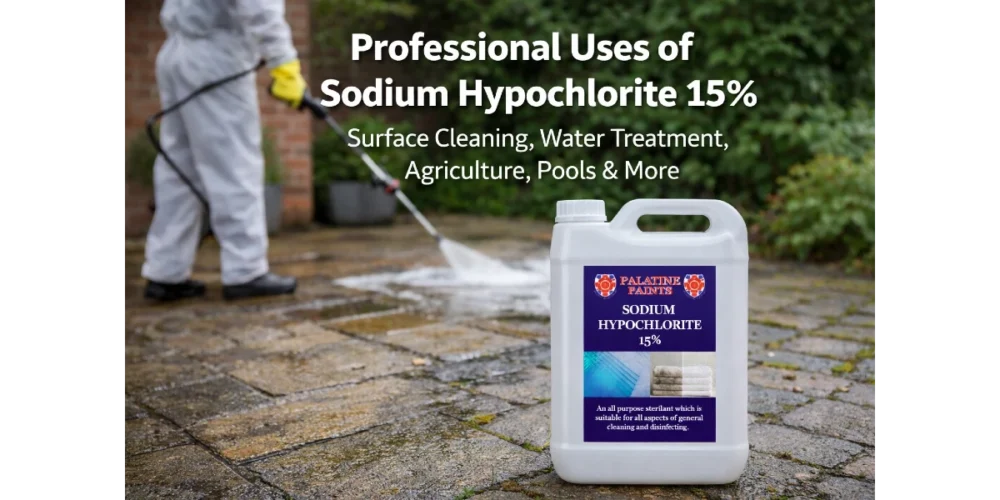
When discussing sodium hypochlorite uses, exterior surface cleaning stands out as a primary application for contractors and homeowners alike. In particular, “soft-washing” utilizes the chemical to kill moss, algae, and lichen at the root. Unlike jet washing alone, this chemical treatment prevents organic regrowth for much longer periods.
Furthermore, the chemical plays an essential role in swimming pool and spa maintenance for keeping water safe. Most operators refer to it as “liquid chlorine” because it provides a rapid way to sanitise water and neutralise pathogens. As a result, the water remains crystal clear and safe for public or private use.
Finally, professionals also apply the chemical for industrial tank cleaning and agricultural hygiene. For instance, farmers use it to sterilise milking equipment and ensure livestock environments remain free from harmful bacteria. Consequently, it acts as a versatile biocide across many different sectors.

Water Treatment, Dairy & Agricultural Hygiene
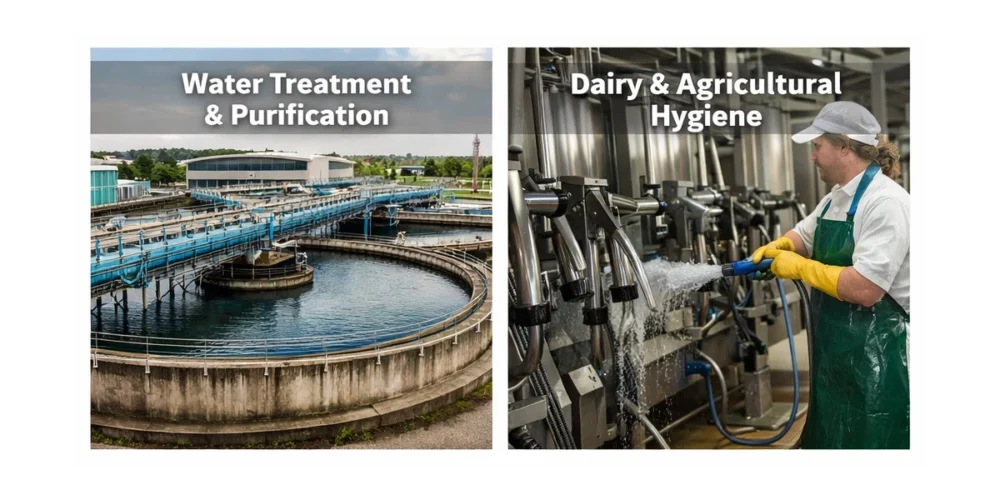
Another critical area involves water treatment and purification on a massive municipal scale to ensure public health. Municipalities use the compound to ensure drinking water remains free from waterborne diseases by destroying harmful microorganisms. Consequently, it protects the supply line while controlling the growth of slime in industrial cooling towers.
In addition, the compound is essential for dairy and agricultural hygiene to prevent the spread of disease in livestock. Farmers use it to sterilise milking parlours, bulk tanks, and pipes to maintain strict hygiene standards for milk production. Therefore, it ensures that agricultural equipment remains free from pathogens like E. coli and Salmonella.
On the other hand, the chemical also serves as a vital component in wastewater management for environmental protection. It neutralises odours and disinfects effluent before it returns to natural waterways or reservoirs. Therefore, the process ensures that we do not release dangerous bacteria into the environment.
Industrial Strength vs Household Bleach
Many people assume that household bleach and industrial sodium hypochlorite are identical products. While they share the same active ingredient, the concentration levels differ significantly across the two types. Most supermarket bleaches contain only 1% to 5% active chlorine.
Conversely, industrial-grade solutions like ours typically reach 14% to 15% concentration. Therefore, you should choose your product based on the severity of the task at hand. If you need to restore a heavily soiled driveway or sterilise industrial equipment, you require the professional version.
As a result, you can dilute the professional product to the exact strength required for your specific project. This makes the industrial version far more economical for large-scale applications. Consequently, it remains the preferred choice for trade professionals who value both performance and value.
Critical Safety and Handling Requirements
Safety must remain your primary concern when working with these high-strength chemical reagents. Because sodium hypochlorite is corrosive, it can cause severe skin burns and permanent eye damage. Therefore, you must wear appropriate PPE, including chemical-resistant gloves and safety goggles.
In addition, never mix this chemical with acids or ammonia-based products. Doing so triggers a dangerous chemical reaction that releases toxic chlorine gas. Consequently, always work in well-ventilated outdoor areas or rooms with high airflow to protect your health.
On the other hand, keep plenty of clean water nearby to rinse any accidental splashes immediately. This precaution prevents serious injury and protects your surrounding surfaces from chemical damage. Therefore, following these safety protocols ensures a successful and safe project outcome.
Tips & Troubleshooting
Ready to get started with professional-grade chemicals? Browse our range of hygiene and disinfection chemicals, available for 1-2 working day delivery or collection from Leigh.
