


All Blogs, Industrial & Commercial
The Ultimate Guide to Survey Line Marker Spray: UK Utility Colour Codes & Best Practices

Jun
What’s Covered in This Guide
Understanding Professional Survey Marking Paint
Professional survey spray paint differs significantly from standard retail aerosols. Manufacturers engineer these specialist formulas for high visibility and reliable ground application on busy construction environments.
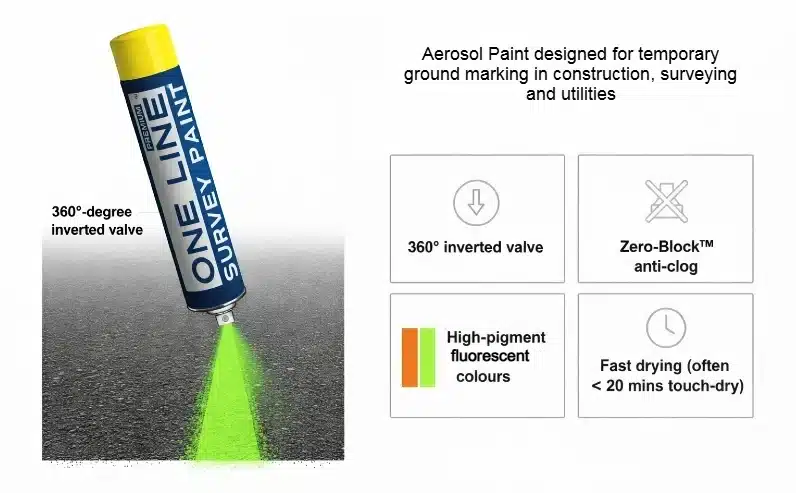
The product features an inverted valve system that allows you to spray directly at the ground without the nozzle clogging up. High-quality resins provide a clean spray path, while a heavy pigment load keeps fluorescent lines bright in rainy conditions.
The paint dries to the touch in under 20 minutes, meaning site traffic and workers will not track the wet markings across the ground. This quick drying cycle keeps your project layout perfectly intact.
Official UK Utility Colour Codes Guide
Using the wrong marker colour on a construction site creates a severe safety hazard. The UK construction industry relies on a strict, standardised utility colour system to identify buried services before digging begins.
Red lines always mark electricity and power lines, while yellow flags indicate gas, oil, or steam pipes. Drinking water pipes use blue paint, and green lines mark communications or fibre optic lines. White markings show proposed excavation lines.
By adhering strictly to these colour combinations, you communicate clear boundaries to the excavation team. This simple step keeps your workers safe and protects vital underground networks.
| Colour | Utility |
|---|---|
| 🔴 Red | Electricity / Power |
| 🟡 Yellow | Gas / Oil / Steam |
| 🔵 Blue | Drinking Water |
| 🟢 Green | Communications / Fibre |
| ⚪ White | Proposed Excavation |
Selecting Paint for Hard and Soft Surfaces
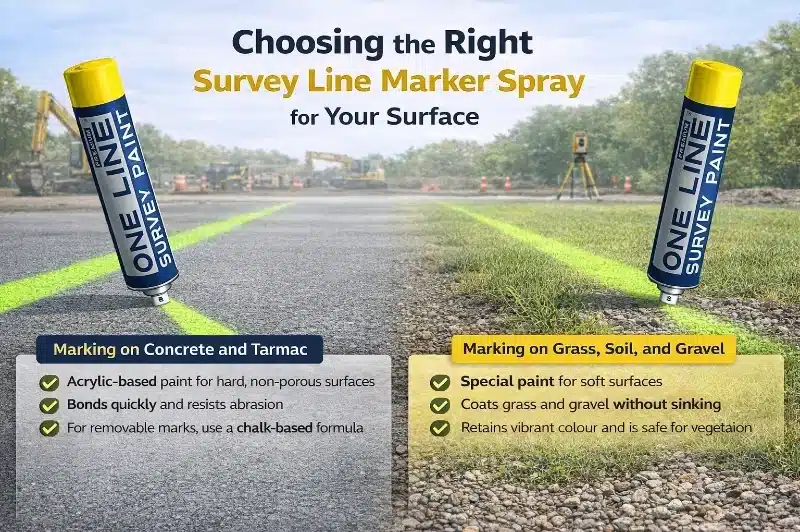
Different ground environments require different types of paint chemistry to stick properly. For hard, non-porous surfaces like tarmac or aged concrete, choose an acrylic-based survey spray paint.
Acrylic paint formulas bond tightly to stone aggregates and resist heavy scuffing from site vehicles. If you need temporary marks that you can wash away later, select a chalk-based formula instead.
For soft ground like grass, soil, or loose gravel, you need a formula that sits on top of the terrain. Quality line marking sprays coat the grass blades or gravel pieces without sinking away or harming the vegetation.
Mastering the Inverted Valve Nozzle
Most survey marking paints feature a specialized 360-degree inverted valve system. This valve design relies on gravity, pointing straight down to deliver maximum paint pressure to the ground surface.
If you try to use a standard upright aerosol can for floor marking, you will drain the gas propellant before using up the paint. This mistake leaves you with a half-full, unusable spray can.
Always check the label for the inverted icon before starting your marking work. Keep the aerosol can at an angle between 45 and 90 degrees from the ground to maintain perfect spray pressure.
Compliance, Line Control, and Site Safety
To follow PAS 128 standards for underground utility detection, you must combine ground-penetrating radar with clear surface paint markings. Accurate survey lines provide a vital visual map for excavation crews.
For highly accurate freehand lettering, hold your paint can roughly 10cm from the ground surface. If you hold the can too high, ambient wind will catch the paint mist and blur your symbols.
When you need long, straight 50mm boundary lines, use a two-wheel or four-wheel line marking applicator tool. The applicator chassis keeps your spray height perfectly level and blocks incoming wind gusts.

Tips & Troubleshooting
Don’t let clogged nozzles or fading lines slow down your site progress. Our high-visibility 750ml Survey Line Marker Spray handles the toughest UK site conditions, from wet gravel to smooth concrete.
