
All Blogs, How To Guides, Hygiene
How to Use Caustic Soda for Drain Cleaning Safely: The Ultimate Expert Guide

Jun
What Is Caustic Soda (Sodium Hydroxide)?
Caustic soda is the common name for sodium hydroxide (NaOH)—a highly alkaline compound widely used in paint manufacturing, soap production, and industrial degreasing. Because its pH level approaches 14 in strong solutions, it is uniquely effective at breaking down fats, grease, hair, and organic debris.
In the world of plumbing, this solution is often the primary defence against stubborn clogs. As a paint manufacturing company with over 80 years of experience, we understand these compounds beyond surface-level DIY advice. We view caustic soda as a powerful chemical reagent that requires respect and precise handling.
Using it incorrectly won’t just fail to clear the clog—it can permanently damage your plumbing or cause severe physical injury. Therefore, understanding the identity of this chemical is the first step toward using it effectively in a domestic environment.
How Sodium Hydroxide Actually Works
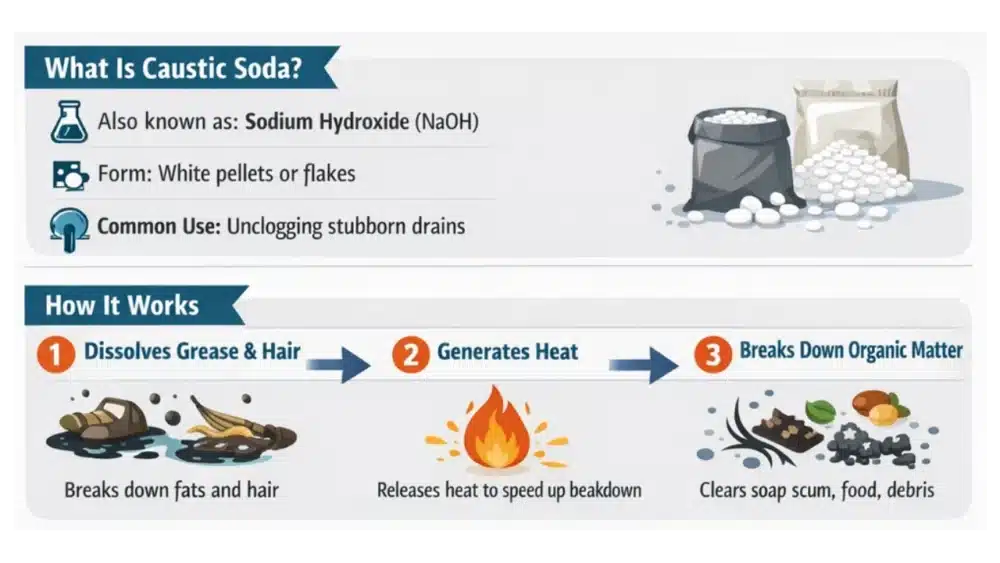
When you use sodium hydroxide to clean drains, it clears blockages through two primary chemical actions. First is saponification, which is the process of turning fats and grease into soap. When the reagent reacts with grease inside your pipes, it converts solid fats into water-soluble compounds that simply flush away.
Second is the exothermic heat release. When sodium hydroxide dissolves in water, it produces significant heat which helps melt congealed fats and loosen compacted debris. This combination of chemical breakdown and heat generation makes caustic soda incredibly effective for organic clogs.
However, heat output increases non-linearly with concentration. This is why “stronger” is not safer; an over-concentrated mix can generate enough heat to soften or warp thinner plastic pipes. Consequently, concentration control is the key difference between professional-grade results and a plumbing disaster.
Pipe Compatibility: Can Your Plumbing Handle It?
Before starting, you must understand your pipe materials. PVC and plastic are generally safe at low concentrations, though excessive heat can warp thinner pipes. Copper and cast iron are moderately compatible but can be weakened or rusted by prolonged exposure to strong alkalis.
Most importantly, sodium hydroxide is NOT compatible with aluminium. The chemical reacts violently with aluminium to produce hydrogen gas, which is highly flammable and dangerous. Likewise, it is not recommended for galvanized steel as it can strip away the protective zinc coating and accelerate rust.
Assessing material compatibility is a standard industrial protocol we use in paint manufacturing. If your sink is aluminium or you have older, galvanized plumbing, you should avoid caustic soda entirely. As a result, you avoid the risk of violent reactions or structural failure within your plumbing system.
| Pipe Material | Compatibility | Risk Level | Explanation |
|---|---|---|---|
| PVC / Plastic | Compatible | Low | Generally safe at low concentrations. However, excessive heat from strong solutions can soften or warp thinner PVC. |
| Copper | Compatible | Moderate | Safe for occasional use, but prolonged exposure to strong alkalis can dull or weaken metal over time. |
| Cast Iron | Compatible | Moderate | Can be used sparingly. In older, already corroded systems, high pH may accelerate rusting. |
| Aluminium | NOT Compatible | EXTREME | Sodium hydroxide reacts with aluminium to produce hydrogen gas, a highly flammable substance. This reaction can be violent and dangerous. |
| Galvanized Steel | NOT Recommended | High | The alkali can strip away the protective zinc coating, exposing underlying steel and accelerating rust formation. |
How to Use Caustic Soda: Step-by-Step
Safety is the absolute priority, so begin by wearing nitrile or neoprene gloves and wrap-around goggles. Because we manufacture coatings, we handle corrosives daily under strict protocols, and you should apply the same discipline at home. Ensure the room is well-ventilated to avoid inhaling any fumes.
Preparation Rule: Always add the caustic soda to cold water. Never pour water onto dry caustic soda, as this can cause the mixture to “volcano” out of the container. Dissolve 30–50g (2–3 tablespoons) into 1 litre of cold water and stir gently with a plastic utensil. The solution will warm up—this is normal.
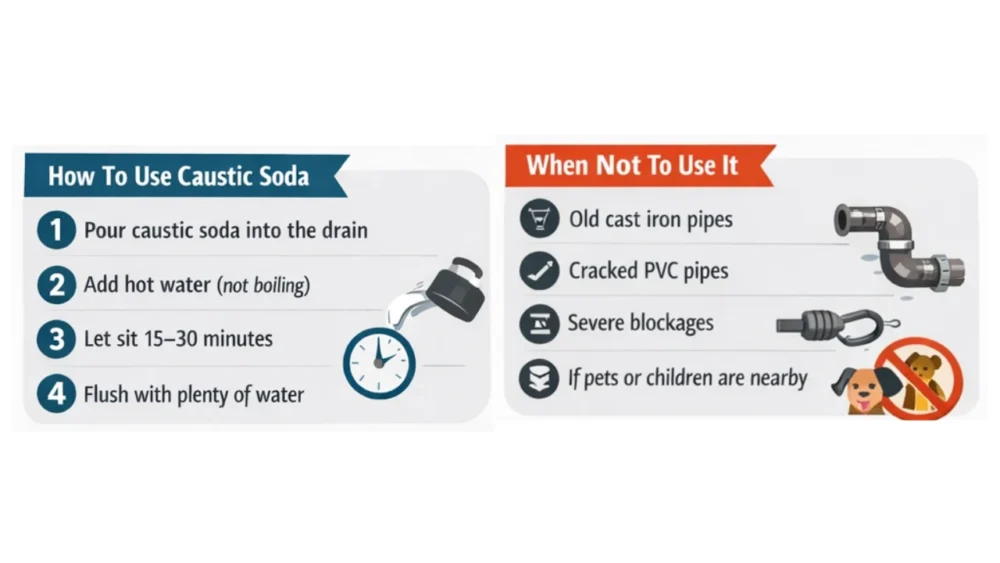
Carefully pour the solution directly into the drain and let it sit for 20 to 30 minutes. Do not leave it overnight, as the soap created by the reaction can eventually harden into a new, rock-like chemical clog. Finally, flush the drain thoroughly with plenty of hot water to clear the residue.
Critical Safety: When NOT to Use it
If your drain is 100% blocked with standing water, do not add chemicals. The caustic soda will sit on top of the clog, creating a pool of highly corrosive “toxic soup.” If a plumber has to snake the drain later, they will be at severe risk of chemical burns when that water splashes back.
Furthermore, never mix caustic soda with other household chemicals like bleach or acidic cleaners. This can lead to violent chemical reactions or the release of toxic gases. More is not better—high concentrations simply increase the risk of pipe damage rather than improving cleaning power.
Finally, use sparingly if you are on a septic system. Frequent use will kill the beneficial bacteria that break down waste, leading to system failure. By respecting these limits, you ensure that the chemical remains an effective tool rather than a hazard to your home and health.
Tips & Troubleshooting
Browse our full range of Sodium Hydroxide — manufactured with over 80 years of industrial expertise and available for both delivery and in-store collection at Leigh, Greater Manchester.
Frequently Asked Questions