Product Description
Painting fresh masonry without the right preparation is a recipe for disaster. Standard masonry paints cannot withstand the chemical intensity of new building materials. Our alkali resisting primer is engineered to provide a robust, chemical resistant foundation, ensuring your topcoat remains pristine for years to come.
Why Every Masonry Project Needs an Alkali Primer
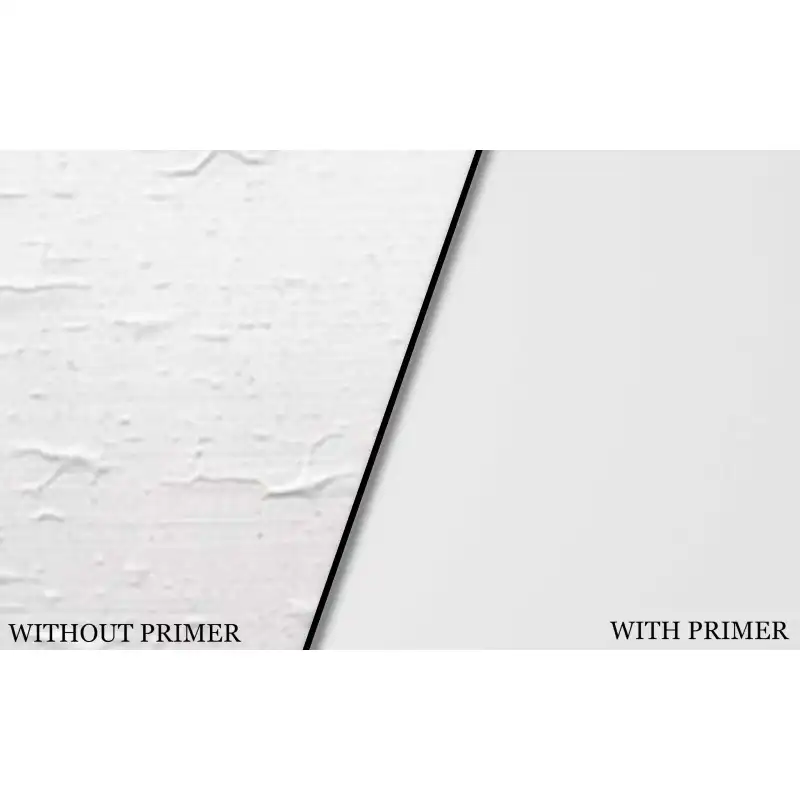
When concrete, plaster, or render is “fresh,” it is naturally highly alkaline. If you apply a standard decorative coat, the alkalinity can eat through the binder, leading to peeling and bleaching. Using a dedicated alkali paint primer isolates the decorative layer from the reactive substrate.
Key Features & Benefits:
-
Chemical Neutralization: Provides a tough barrier against high pH levels in concrete, brick, and lime rich plaster.
-
Deep Penetration: This alkali primer sinks into porous surfaces to provide a “key” for both oil based and water based topcoats.
-
Efflorescence Resistance: Formulated to resist the “salting” effect common in new masonry walls.
- Before painting, it is vital to lock down “chalky” or friable surfaces. This primer acts as a high performance masonry primer for fresh concrete, turning a dusty surface into a solid base.
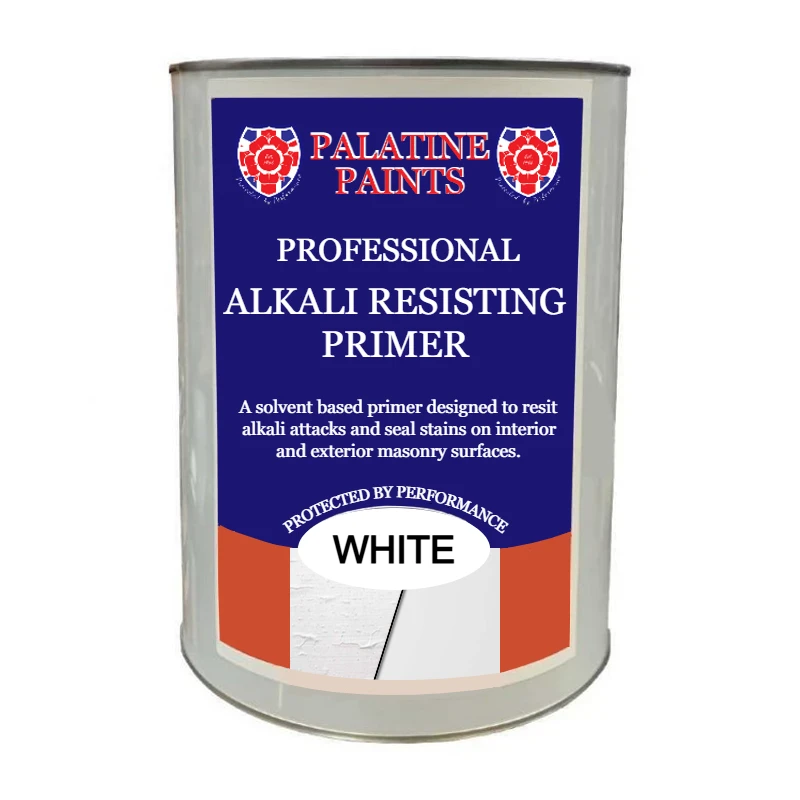
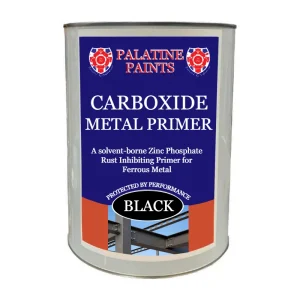
Palatine Alkali Resisting Primer is a low odour, solvent based primer paint designed for use on interior and exterior masonry surfaces that may contain alkalis.
It prevents alkalis from attacking the topcoat, avoiding visible damage from occurring on the surface. It can also be used as a sealer or stabiliser, and is suitable for surfaces such as new lime plaster, cement rendering, concrete block, stone and blockwork. This primer is also suitable for priming surfaces that have been treated with fire retardant chemicals.
Why is an alkali primer necessary for new plaster?
Many contractors and DIYers ask, “Does new plaster need an alkali resisting primer?” The answer is yes. New plaster is highly alkaline and contains “free lime.” When moisture carries these alkalis to the surface, they attack the paint film. Using a dedicated alkali paint primer neutralizes the surface and prevents “alkaline burn,” which typically manifests as patchy, faded, or yellowish spots on your finished wall.
How to prevent saponification in oil based paint
One of the most common issues with painting new masonry is saponification. This is a chemical reaction where the alkalis in the wall react with the oils in the paint, effectively turning the paint into a sticky, soap like substance that never dries. Our alkali primer acts as an impenetrable shield, isolating the topcoat from the reactive substrate. It is the best primer for painting over fresh concrete and render because it stops this reaction before it starts.
Always carry out a test patch (approximately 100x100mm) before full application to ensure compatibility with previous coatings and the substrate, and to ensure the colour achieved meets your requirements. Failure to do so will result in a product refund claim not being accepted.
For full details, please see the datasheets.

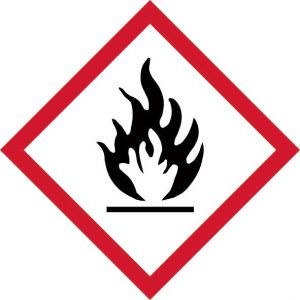
Palatine Alkali Resisting Primer Paint is touch dry in 3 hours and hard dry in 24 hours. Leave no more than 16 hours before overcoating.
Estimated Coverage: 11.6sqm per litre
Surface Preparation
Ensure all surfaces are clean, dry, and free from dust, grease, and contaminants.
For previously painted surfaces, confirm coatings are sound and non-flaking. Mechanically abrade to provide a key and maximise adhesion.
On powdery, chalky, or porous surfaces, remove loose material and stabilise as necessary.
New substrates (lime plaster, cement render, concrete, brick, stone, blockwork) must be dry and stable.
Mixing
Stir thoroughly with a drill stirrer or wooden baton (minimum 2” wide) before and during application to maintain consistency.
Application
Apply using brush, roller (solvent-resistant sleeve), or spray (airless or conventional).
Work well into the surface. Avoid excessive film thickness to prevent drying issues.
Minimum application temperature: 15°C (air and substrate).
Apply subsequent coats once the previous coat is dry (typically 12–24 hours). If more than 5 days elapse, lightly abrade before recoating.
Avoid power washing for at least 7 days after application.
Thinning & Cleaning
Thin with white spirit if required.
Clean equipment immediately after use with white spirit.
Follow all safety instructions on product labels and refer to the Safety Data Sheet before use.
Q: Does new plaster need an alkali resisting primer?
A: Yes. New plaster is highly alkaline and can cause standard paint to peel or fade through a process called “alkaline burn.” Using an alkali resisting primer is the essential first step to neutralize the surface, ensuring the topcoat bonds correctly and maintains its true color without bleaching.
Q: What is the difference between an alkali primer and a standard primer?
A: A standard primer is designed for adhesion, but an alkali primer is specifically formulated to withstand high-pH environments. While a normal primer may fail and “saponify” (turn to soap) when it touches fresh masonry, an alkali paint primer creates a chemical-resistant barrier that protects the paint film.
Q: How do I prevent saponification in oil based paint?
A: To prevent saponification, you must apply a coat of alkali resisting primer before using any oil-based topcoats on masonry. This primer prevents the oils in the paint from reacting with the alkalis in the concrete or plaster, which would otherwise keep the paint permanently tacky and lead to eventual failure.
Q: How long should I wait before painting over new render?
A: Ideally, new render should cure for at least 28 days. However, if you must paint sooner, applying an alkali resisting primer allows you to seal the surface as soon as it is visually dry. This locks in the “free lime” and salts, allowing you to proceed with your alkali paint primer and topcoat safely.







Reviews
There are no reviews yet.